








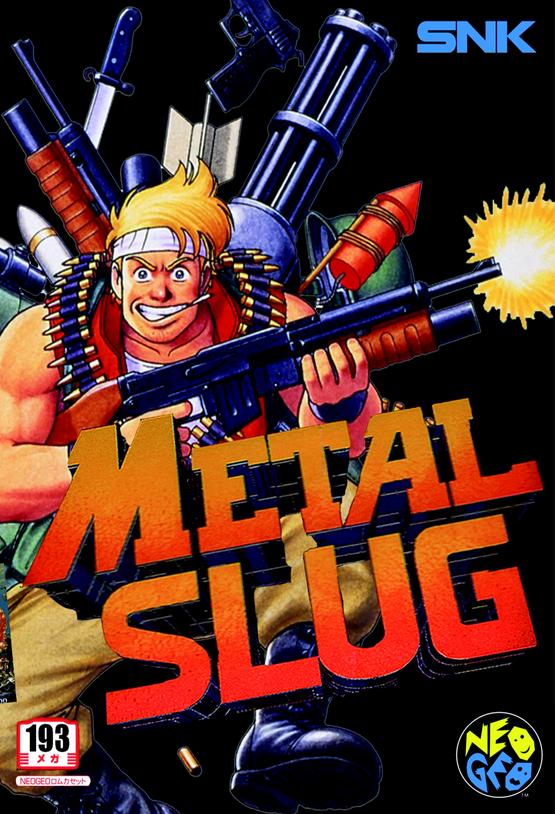
Released date: 4/18/1996 (USA), 4/19/1996 (JP)
Original System: Neo-Geo MVS
Developed by: Nazca Corporation
Published by: SNK
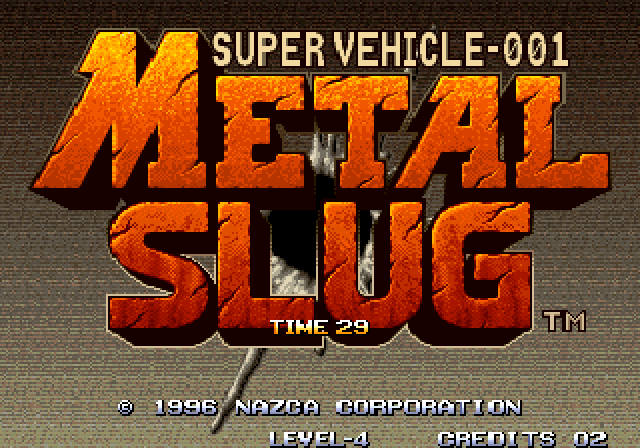
Metal Slug is an action run-and-gun arcade game for the 24 bit
Neo-Geo arcade system. It's known for it's frenetic, over the top action
and highly detailed and animated sprite art.
Developed by Nazca Corporation, a group of developers who made shooters for
Irem, they had released a game called In The Hunt prior to Metal Slug, which featured
a submarine. The team wanted to take the ideas and concepts
shown off there and utilize them in a game about controlling a tank.
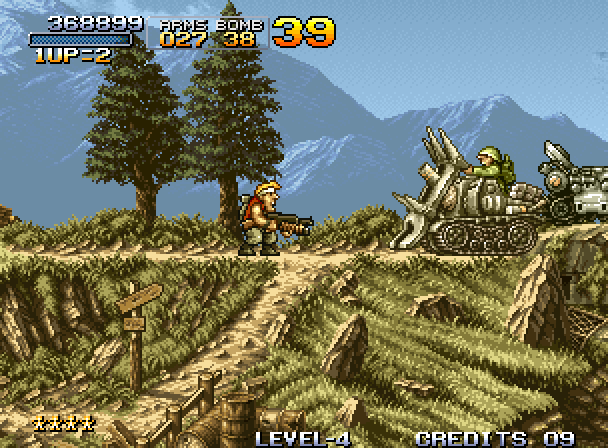
Metal Slug pushed every aspect of the Neo-Geo system to its limits. It featured
massive amounts of sprites on screen at once as the player is barraged by enemies
and bullets from every direction. Effects and explosions fire off with fluid animation
and crunchy sound effects.
The game also featured massive machine and tank bosses to take on, often filling up
half the screen or more. Arcade gamers hadn't seen graphics and gameplay like this
yet and were enthralled by the spectacle.
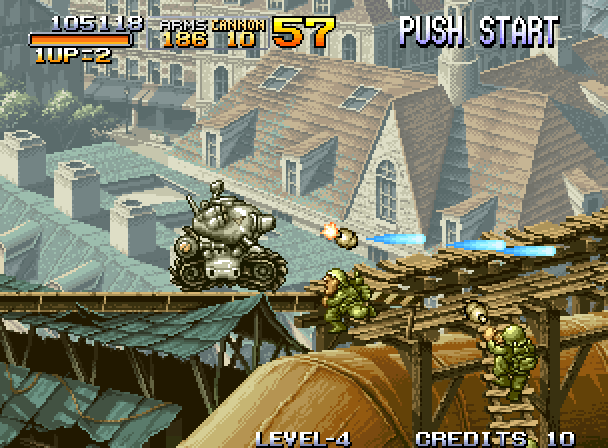
At the time of its release, the 3D gaming revolution was in full swing, with the
Playstation 1 and Sega Saturn on the market and the Nintendo 64 soon to release. Gamers
were ready to see new, eye-popping 3D graphics in all the newest games, so the developers
of Metal Slug went all out with the sprite work and animations.
Despite their small size, the movements and actions of the main characters and enemy soldiers
were fluidly animated with humorous and life-like detail packed into their tiny sprites.
In addition, the game was full of hulking metal military machines that carried just as much detail
and movement, making you really feel like a small infantry unit taking on a monstrous war machine.
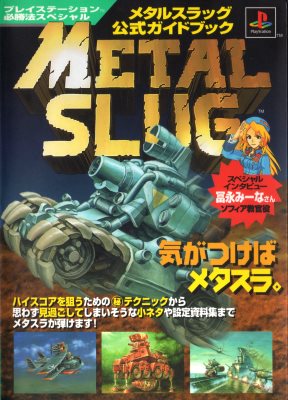
In addition to the sprite work, the team crammed an enormous soundtrack into the game, taking
inspiration
from military marches, progressive rock and jazz fusion.
The sountrack is synthesized
using the on-board Yamaha YM2610 synthesizer chip, but is made to sound like a live band is playing,
emulating real instruments using the built
in chips.
Sounds effects boomed and crunched as well, with each bullet and missile fired being accompanied with
the appropriate speaker-splitting effect. A pre-recorded and sampled voice announced weapon pickups and provided direction
and even encouragement and enemies scream
and wail while you pick them off.
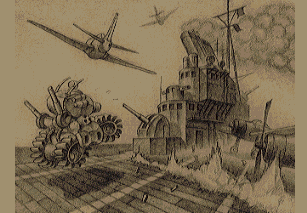
The game went through a few phases of development. Originally, the gameplay focused on
riding the Metal Slug tank across the levels, utilizing the built in turret and missile
launcher to blast your way throgh the game.
Eventually, the idea was expanded to allow the character to get out of the tank and run
around before finally shifting focus to controlling a character who can pick up weapon
upgrades and using the tank as a bonus or super mechanic.
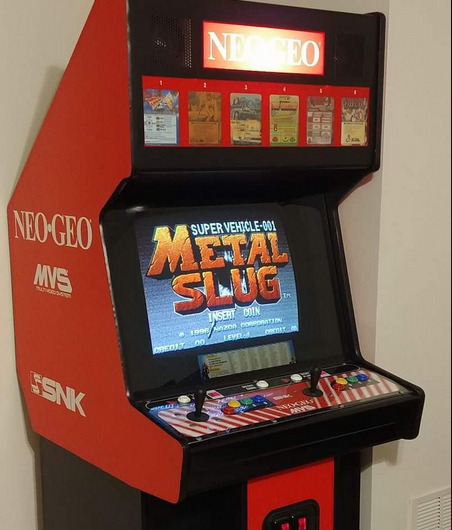
Metal Slug was moderately popular on release. As previously mentioned, gamers were ready
for newer 3D games, and a 2D sprite based game in that environment was a hard sell. However,
Metal Slug endured and went on to become an arcade classic.
Even though it was released late into the lifespan of the Neo-Geo, it helped define
the look and feel of the system during the late nineties and would go on to spawn a
series of games and spinoffs in the years to come, with each entry pushing the technology
of the system to its limit.